
ACL Tear (Anterior Cruciate Ligament Injury)
Restoring Knee Stability. Returning Patients to Activities They Love.
An ACL tear is one of the most common and significant knee injuries affecting athletes and active individuals of all ages. Whether sustained on the football field, basketball court, soccer pitch, ski slopes or during everyday activities, an ACL injury can dramatically impact knee stability, athletic performance and quality of life.
At The Knee Center at Andrews Sports Medicine, our fellowship-trained non-surgical sports medicine physicians and orthopaedic knee surgeons provide comprehensive care for ACL injuries—from expert diagnosis and rehabilitation to advanced arthroscopic ACL reconstruction surgery. Our team-based approach ensures every patient receives an individualized treatment plan focused on restoring knee function, protecting long-term joint health and safely returning them to the activities they love.
From youth and high school athletes to collegiate competitors, active adults and weekend warriors, we’re here to help patients achieve victory over injury.
What is an ACL Tear?
The anterior cruciate ligament (ACL) is one of the four primary ligaments of the knee and plays a critical role in maintaining knee stability. Located in the center of the knee joint, the ACL connects the femur (thigh bone) to the tibia (shin bone) and helps control both forward movement and rotational stability of the knee.
The ACL is responsible for:
- Stabilizing the knee during cutting, pivoting and twisting movements
- Preventing excessive forward movement of the tibia
- Providing rotational stability during sports and physical activity
- Supporting jumping, landing and rapid changes in direction
- Maintaining knee function during both athletics and everyday activities
Although some individuals can function without an ACL during routine activities, an ACL-deficient knee is at an increased risk for future meniscus tears, cartilage damage and progressive knee instability.
What causes an ACL Tear?
Approximately 70% of ACL injuries occur without direct contact and are frequently caused by sudden movements during athletic activity. Rapid deceleration, cutting, pivoting or awkward landings can place tremendous stress on the ACL and result in injury.
Common causes of ACL tears include:
- Sudden changes in direction
- Cutting & pivoting movements
- Abrupt stops while running
- Awkward landings following a jump
- Hyperextension injuries
- Sports-related collisions and tackles
- Motor vehicle accidents and traumatic injuries
ACL tears commonly occur in sports such as:
- Football
- Basketball
- Soccer
- Baseball & Softball
- Volleyball
- Lacrosse
- Skiing & Snowboarding
- Gymnastics
- Tennis & Pickleball
Female athletes are particularly susceptible to ACL injuries due to several anatomical and biomechanical factors, making injury prevention programs and appropriate rehabilitation especially important.
Signs & Symptoms of ACL Tears
Many patients immediately recognize something is wrong following an ACL injury. One of the most common complaints is hearing or feeling a “pop” in the knee at the time of injury.
Symptoms may include:
- A popping sensation during the injury
- Immediate knee pain
- Rapid swelling of the knee
- Knee instability or buckling
- Difficulty bearing weight
- Loss of range of motion
- Pain when twisting or pivoting
- Inability to continue athletic activity
- Feeling that the knee may “give way”
Prompt evaluation by a knee specialist is important following an acute knee injury, particularly when swelling and instability are present.
How is an ACL Tear Diagnosed?
An accurate diagnosis is essential when determining the most appropriate treatment plan.
Evaluation of an ACL injury typically includes:
- Comprehensive physical examination
- Knee stability testing
- Digital X-rays to evaluate for associated injuries
- MRI imaging to confirm the ACL tear and identify additional damage
ACL tears are frequently associated with injuries to the meniscus, cartilage and other knee ligaments. Advanced imaging allows our specialists to evaluate the entire knee joint and develop a comprehensive treatment strategy tailored to each patient’s goals and activity level.
Non-Surgical Treatment for ACL Tears
Not every ACL tear requires surgery. Treatment recommendations are based upon several factors, including age, activity level, degree of instability, athletic goals and associated injuries.
Non-surgical treatment may be appropriate for:
- Patients with lower activity demands
- Partial ACL tears
- Individuals with minimal instability
- Patients whose activities do not require significant pivoting or cutting movements
Treatment options may include:
- Activity modification
- Physical therapy
- Knee bracing
- Anti-inflammatory medications
- Progressive strengthening programs
- Functional movement and stability training
Many patients can successfully return to their daily activities through an individualized rehabilitation program without surgical intervention.
ACL Reconstruction Surgery
For athletes and active individuals experiencing knee instability, ACL reconstruction is frequently recommended to restore knee function and safely facilitate a return to sports and physical activity.
ACL reconstruction is performed arthroscopically through small incisions using advanced minimally invasive surgical techniques. Rather than repairing the torn ligament itself, the ACL is reconstructed using a graft that serves as a new ligament.
Potential graft options include:
- Patellar tendon autograft
- Quadriceps tendon autograft
- Hamstring tendon autograft
- Allograft tissue in select patients
The appropriate graft choice depends upon several factors, including the patient’s age, sport, activity level and long-term goals. Our fellowship-trained knee surgeons customize treatment recommendations for every patient to optimize both short and long-term outcomes.
Rehabilitation & Return to Sport
Successful ACL treatment extends far beyond surgery alone. Comprehensive rehabilitation plays a critical role in restoring strength, mobility, balance and confidence before returning to athletic participation.
Recovery focuses on restoring:
- Knee range of motion
- Lower extremity strength
- Functional movement patterns
- Balance and stability
- Sport-specific performance
- Safe return-to-play readiness
Return-to-sport timelines vary based upon the individual patient, sport and rehabilitation progress, but many athletes safely return to competition approximately nine to twelve months following ACL reconstruction.
Our goal is not simply to heal the ACL—it is to ensure patients are physically prepared to safely return to the activities they love while minimizing the risk of future injury.
When Should You See a Knee Specialist?
You should seek evaluation if you experience:
- A popping sensation in the knee
- Significant swelling following an injury
- Knee instability or buckling
- Difficulty bearing weight
- Persistent pain or loss of motion
- Inability to safely return to sports or exercise
Why Choose The Knee Center at Andrews Sports Medicine?
For decades, Andrews Sports Medicine has been trusted by athletes and active individuals seeking exceptional orthopaedic care. Our collaborative team of fellowship-trained physicians provides comprehensive treatment for ACL tears and other complex knee injuries utilizing the latest evidence-based treatment options and rehabilitation strategies.
Whether treatment involves physical therapy, non-surgical management or ACL reconstruction surgery, our focus remains the same—to restore knee stability, protect long-term joint health and safely return every patient to the activities they love.
If you’ve suffered an ACL injury, we’re here to help you achieve victory over injury.
To schedule an appointment, call 205-939-3699 or request an appointment online today.
Request an Appointment Online
Back to Knee
Content Center
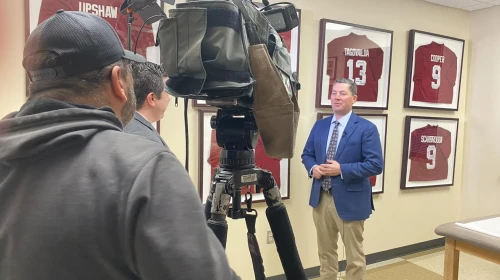
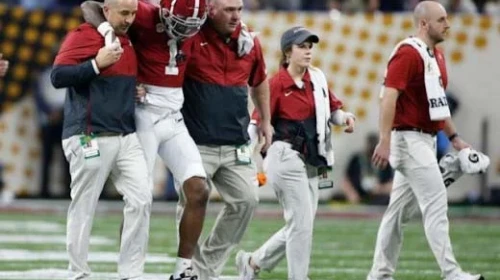
USA Today reporter and Texans Talk Podcast host, Mark Lane, interviewed Dr. Lyle Cain to get his perspective on the recoveries of former Alabama Crimson Tide receivers, John Metchie and Jameson Williamson, going into the 2022 NFL Draft.
Read More